
Automotive
Automotive Test Systems Built to Evolve
From electric drivetrains to advanced driver-assistance systems (ADAS), automotive innovation moves fast. Testeract delivers modular, vendor-neutral ATE platforms that keep pace with evolving vehicle electronics, compliance requirements, and technology refresh cycles.
Why Automotive Systems Fail Forward
Industry challanges
-
Rapid technology shifts in EV, ADAS, and infotainment drive constant test updates.
-
Complex mix of digital, RF, and high-voltage systems in a single vehicle architecture.
-
Pressure to reduce test time while maintaining accuracy and safety compliance.
-
Global compliance and traceability demands (ISO 26262, IATF 16949).
-
Limited engineering resources stretched across development, validation, and production.
Our Approach
Automated Test System Integration and Hardware
Automated Test System Integration and Hardware
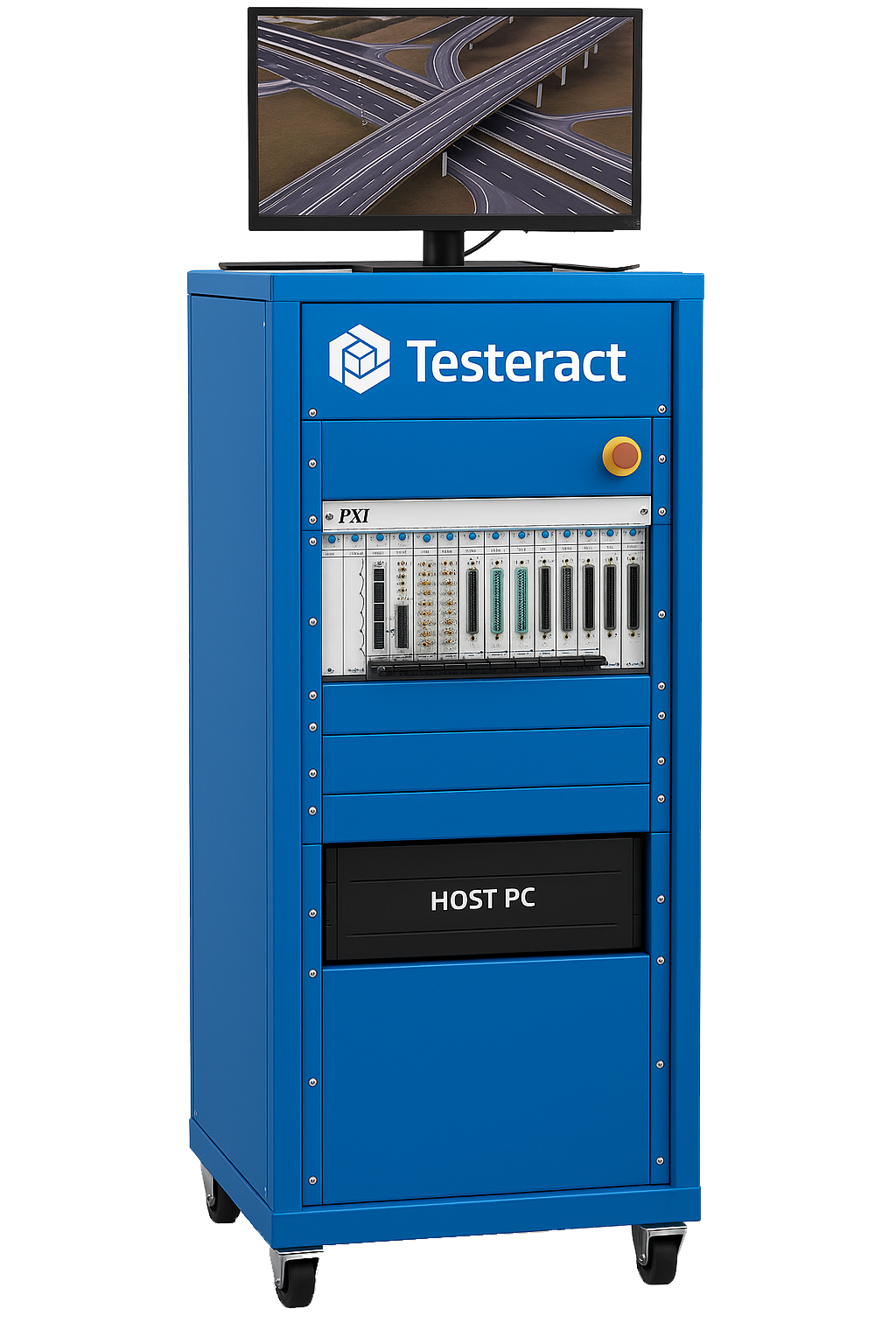
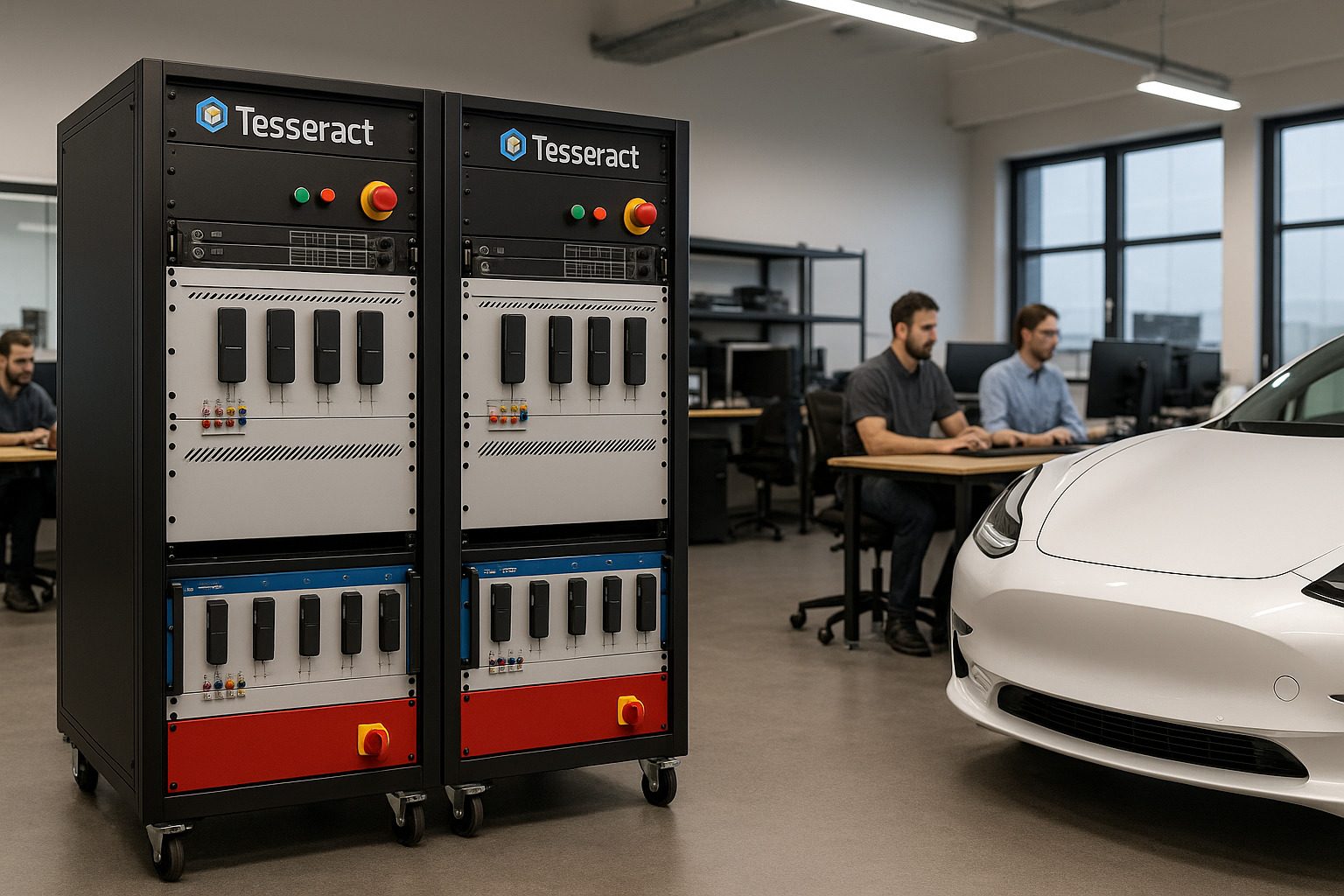
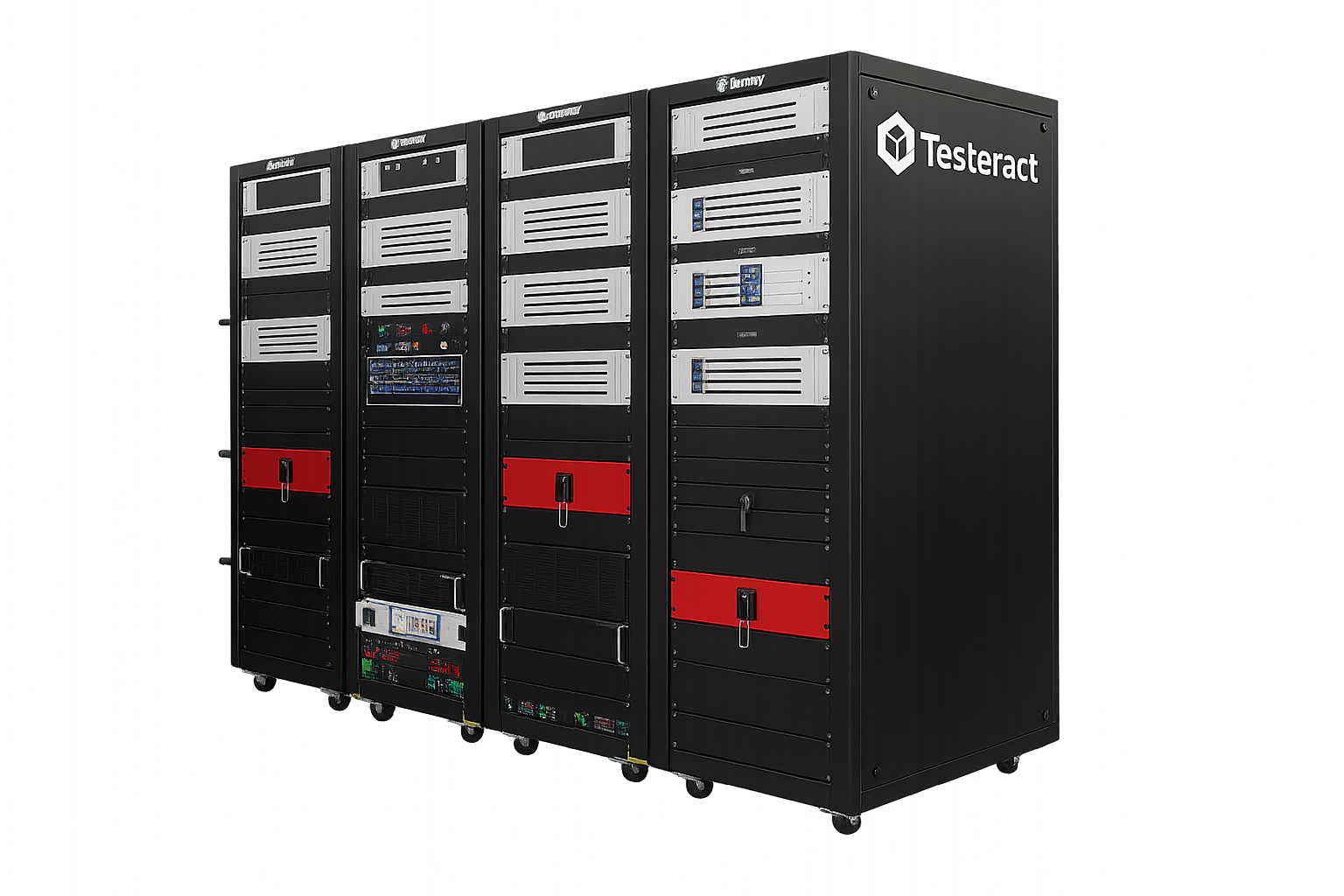
Automotive test environments must cover a wide spectrum—from EV powertrain validation and ECU production test to infotainment and ADAS sensor systems. Testeract builds cohesive test architectures that unify PXI, LXI, SLSC, FPGA, and other modular platforms into scalable solutions. Functional test benches are designed for throughput and repeatability, while Hardware-in-the-Loop (HIL) platforms support simulation of ECUs, power systems, and safety-critical electronics. Together, they create a connected ecosystem that evolves with new vehicle technologies.
Key Automotive Benefits:
-
Purpose-built integration for functional, validation, and Hardware-in-the-Loop (HIL) systems.
-
Support for domains spanning EV drivetrains, RF/ADAS, and in-vehicle networking.
-
Compliance with ISO 26262 and global automotive quality standards.
-
Architectures that scale from prototype labs to high-volume production lines.
Software Framework & Automation Tools
Software Framework & Automation Tools
Our flagship TestPoint™ HAL-driven framework decouples test code from hardware, enabling rapid updates as automotive technology evolves. Swap NI, Keysight, Pickering, or Rohde & Schwarz instruments without costly rewrites. Support LabVIEW, TestStand, Python, MATLAB, and PathWave—ensuring your software ecosystem adapts as fast as your hardware.
Key Automotive Benefits:
-
HAL-driven modularity reduces revalidation cost.
-
Support for HIL simulation of ECUs, ADAS sensors, and EV subsystems.
-
Actionable reporting and traceability aligned with automotive compliance.
Design Engineering & Lifecycle Support
Design Engineering & Lifecycle Support
Automotive test isn’t just about initial deployment—it’s about sustaining production for years. Testeract provides design, wiring, fixturing, validation, training, and refresh planning to ensure your systems scale with changing vehicle platforms.
Key Automotive Benefits:
-
Proactive obsolescence management and refresh cycles.
-
Training and knowledge transfer for OEM and Tier-1 teams.
-
Lifecycle support that ensures ROI over long automotive programs.
Applications
Proven Across Automotive Programs
“A test system isn’t just a project expense — it’s a program enabler, if done right.”
EV Powertrain & Battery management Systems
Advanced Driver-Assistance Systems (ADAS) & Radar Sensors
In Vehicle Networking (CAN, LIN, FlexRay, Ethernet)
Infotainment & Telematics Systems
Electronic Control Units (ECUs) Validation and Production Test
Driving the Future of Automotive Test: Modular ATE Across Software, Hardware, and Lifecycle Support.
Automotive innovation doesn’t stand still. From electrification and ADAS to infotainment and in-vehicle networking, each new feature introduces fresh test challenges. This white paper explores how a modular ATE approach—spanning software frameworks, hardware integration, and engineering services—helps OEMs and Tier-1 suppliers reduce test time, manage obsolescence, and scale across global programs.
You’ll learn how:
-
Software frameworks like TestPoint’s HAL-driven architecture support both functional automation and Hardware-in-the-Loop (HIL) simulation.
-
Hardware integration unifies PXI, LXI, SLSC, FPGA, and domain-specific tools for EV powertrain, ADAS, and infotainment testing.
-
Engineering services and lifecycle support ensure compliance with ISO 26262, manage refresh cycles, and sustain test systems from prototype to production.
With real-world examples, this paper shows how modularity future-proofs your test strategy—so you can keep pace with rapid automotive technology shifts.